Putin’s High-Stakes Gamble: The Art of Brinkmanship in His Confrontation with the West
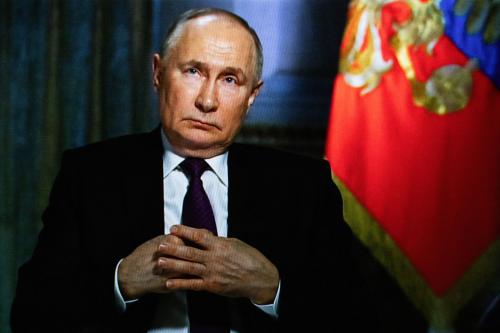
Moscow, Russia – In what can be described as a generation-defining geopolitical struggle, Russian President Vladimir Putin is engaged in a high-stakes “big war” with the West, not necessarily of open, direct conflict, but one of relentless pressure, calculated escalation, and the masterful use of brinkmanship. His overarching goal is audacious: to dismantle the U.S.-led global order and carve out a new multipolar world where Russia reclaims its status as a primary global power.1 The war in Ukraine serves as the most visible and brutal front of this broader conflict, but the tactics of brinkmanship are deployed across a spectrum of domains, from nuclear posturing to the weaponization of energy and information.
At the heart of Putin’s strategy lies a profound belief that the post-Cold War settlement was a historical injustice that relegated Russia to a subordinate position.2His actions are driven by a desire to revise this outcome, pushing back against what he perceives as Western encroachment in Russia’s traditional spheres of influence and challenging the very foundations of the international security architecture.3
The Calculated Madness: Putin’s Brand of Brinkmanship
Brinkmanship, the art of pursuing a dangerous policy to the limits of safety before stopping, is a cornerstone of Putin’s foreign policy. It is a calculated strategy designed to sow division, test the resolve of his adversaries, and force concessions without triggering a full-scale, direct military confrontation with NATO.4 Key elements of his approach include:
Nuclear Saber-Rattling: The most potent and dangerous tool in Putin’s arsenal is the repeated and often veiled threat of using nuclear weapons.5From placing nuclear forces on high alert at the outset of the Ukraine invasion to ambiguous statements about defending Russian territory with “all available means,” these pronouncements are designed to instill fear and deter greater Western involvement in the conflict.6 While the actual use of such weapons remains a low probability, the mere suggestion serves to paralyze Western decision-making and create a constant sense of anxiety.
“Gray Zone” Warfare: Putin has demonstrated a mastery of operating in the ambiguous space between peace and war. This includes a range of hostile activities that fall below the threshold of a conventional military attack, such as cyberattacks on critical infrastructure, disinformation campaigns to sow social and political discord, and provocative military maneuvers.7Recent examples include repeated drone incursions and violations of NATO airspace, meticulously calibrated to test response times and sow doubt about the alliance’s collective security commitments without triggering an immediate armed response.8
Weaponization of Resources: Russia has long used its vast energy reserves as a tool of coercion.9 By manipulating the flow of natural gas and oil, Moscow has sought to create economic pressure on European nations, hoping to fracture their unity and undermine their support for Ukraine. While this leverage has diminished as Europe diversifies its energy sources, it remains a potent symbol of Russia’s willingness to use all instruments of national power in its confrontation with the West.
The “Red Line” Gambit: Throughout the Ukraine conflict, the Kremlin has repeatedly issued “red lines” – actions by the West that it claims would provoke a severe Russian response.10 These have included the provision of certain types of advanced weaponry to Ukraine and direct NATO intervention. However, as the West has cautiously and incrementally crossed many of these self-declared lines without triggering a catastrophic escalation, the credibility of these threats has been tested. This tactic, while potentially risky, allows Putin to control the narrative of escalation and portray any Western assistance to Ukraine as a provocative act.
The Endgame: A New World Order
Putin’s brinkmanship is not an end in itself but a means to a much larger strategic objective. He envisions a world where the unipolar moment of American dominance is over, replaced by a system where major powers like Russia, China, and others have their own spheres of influence and a greater say in global affairs.11
By challenging the existing order through a sustained campaign of pressure and calculated risks, Putin aims to demonstrate the West’s perceived weakness and lack of resolve.12He seeks to expose the fissures within NATO and the European Union, betting that over time, the economic and social costs of confronting Russia will lead to a fracturing of the Western coalition.13
The effectiveness and ultimate outcome of this high-stakes gamble remain uncertain. While Putin’s tactics have at times appeared to yield short-term gains, they have also led to Russia’s increased international isolation, severe economic sanctions, and a revitalized and more unified NATO.14 The “big war” with the West is a protracted struggle, and the art of brinkmanship, as practiced by Vladimir Putin, will continue to define the perilous landscape of 21st-century geopolitics.
Recent analysis indicates that while Russian President Vladimir Putin’s brinkmanship tactics have escalated tensions, particularly through the use of nuclear threats and hybrid warfare, Russia has neither the capability nor the appetite for direct conventional military conflict with NATO. These actions are designed to weaken Western support for Ukraine, test alliance resolve, and interfere in rivals’ domestic politics. [1, 2, 3, 4, 5]
The elements of brinkmanship
Nuclear threatsSince the 2022 invasion of Ukraine, Russia has repeatedly engaged in nuclear saber-rattling to deter the West from increasing support for Ukraine.
This has included placing nuclear forces on high alert, deploying tactical nuclear weapons to Belarus, and testing new capabilities.
Some experts argue this is largely a bluff, as a nuclear attack against a NATO state would likely result in a retaliatory nuclear strike.
However, Western powers still take these threats seriously and plan for potential escalations. [3, 6, 8, 9, 10]
Hybrid warfareRussia has intensified its use of hybrid warfare tactics to destabilize the West without triggering a direct war. Recent examples include:
Airspace incursions: In September 2025, Russia flew drones into Polish and Romanian airspace and sent fighter jets into Estonian airspace over the Baltic Sea. These were perceived as tests of NATO’s air defenses and resolve.
Sabotage: In March 2025, a report documented numerous Russian sabotage attacks against Western infrastructure, including transportation, government, and critical infrastructure targets.
Disinformation and propaganda: Russia continues to wage disinformation campaigns to sow division within the West, frame Russia as a victim, and garner support from populist and anti-establishment groups.
Cyberattacks: Russia has long used cyberattacks to disrupt Western governments and infrastructure. [2, 11, 12, 13, 14, 15, 16]
Exploiting Western divisionsA key part of Putin’s strategy is to exploit existing disagreements and political shifts within the West.
US elections: Russia’s hybrid warfare and nuclear threats are amplified to test the incoming US administration and exploit uncertainty regarding American commitment to European security.
European cohesion: Russia attempts to create daylight between the US and its European allies and stoke anti-war sentiments, as seen with the recent airspace incursions over Poland and Romania. [3, 17, 18, 19, 20]
Why a conventional war with NATO is unlikely
Experts generally agree that despite the rhetoric and provocations, Russia is not seeking a direct conventional war with NATO.
NATO’s strength: NATO’s conventional military capability far outmatches Russia’s, especially given the significant losses sustained in the ongoing war against Ukraine.
Nuclear parity: While Russia holds an advantage in tactical nuclear weapons, both Russia and the US maintain strategic parity under arms control agreements (including the recently extended New START treaty), meaning a nuclear conflict would lead to Mutually Assured Destruction.
Diversionary tactics: The brinkmanship serves to distract from Russia’s struggles in Ukraine, project strength, and force the West to over-prioritize defensive measures. [1, 3, 8, 21, 22]
Netanyahu, Israel, and the World: A Nation at a Crossroads Amidst Shifting Global Tides
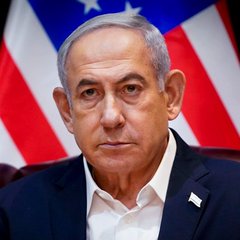
Jerusalem – Prime Minister Benjamin Netanyahu’s Israel finds itself at a pivotal and increasingly contentious juncture on the world stage.1A confluence of escalating conflict in Gaza, a surge in international recognition for a Palestinian state, and unprecedented legal challenges against its leadership has thrust the nation into a deepening diplomatic isolation, testing its long-standing alliances and prompting a defiant doubling-down from its veteran leader.2
Netanyahu, Israel’s longest-serving prime minister, is navigating a complex web of domestic and international pressures.3At home, he faces a society still reeling from the October 7th attacks, significant protests calling for new elections and a deal to release remaining hostages, and the inherent fragility of his right-wing coalition government.4 Abroad, the landscape is arguably more challenging than at any point in Israel’s recent history.
The ongoing war in Gaza, launched in response to the Hamas-led attacks, has led to a catastrophic humanitarian crisis and a mounting death toll, galvanizing widespread international condemnation.5This has culminated in a significant diplomatic shift, with a wave of countries, including traditional allies like the United Kingdom, France, Canada, and Australia, formally recognizing a state of Palestine.6This concerted move is largely seen as a rebuke of Netanyahu’s long-standing opposition to a two-state solution and his government’s continued expansion of settlements in the occupied West Bank.7
In a defiant stance, Netanyahu has vehemently rejected this trend, labeling the recognitions a “reward for terrorism” and vowing that a Palestinian state will not be established on his watch.8He is expected to use his upcoming address to the United Nations General Assembly as a platform to vigorously defend Israel’s actions and condemn the international pressure.9
Adding to the diplomatic strain are significant legal challenges.10The International Criminal Court (ICC) has issued an arrest warrant for Netanyahu and his Defense Minister Yoav Gallant for alleged war crimes and crimes against humanity in Gaza.11Simultaneously, the International Court of Justice (ICJ) is hearing a case brought by South Africa accusing Israel of genocide, a charge Israel strenuously denies.12These legal proceedings have further isolated Israel and placed its leaders in a precarious international position.13
The relationship with its most crucial ally, the United States, has also shown signs of friction.14 While the Biden administration has maintained its fundamental support for Israel’s security, there have been public disagreements over the conduct of the war and the vision for a post-conflict Gaza. In a notable development, President Donald Trump recently stated he would not permit Israel to annex the West Bank, a move long championed by the right-wing elements of Netanyahu’s coalition.15 This public divergence highlights the evolving dynamics and potential limits of American backing.
Netanyahu’s foreign policy, often described as a doctrine of “hawkish neoliberalism,” has prioritized economic independence to enable a more assertive and independent foreign policy.16This approach has seen Israel forge new relationships, notably through the Abraham Accords, which normalized ties with several Arab nations.17 However, the current conflict and the hardline stance of his government are now straining these nascent partnerships.
As Israel navigates this turbulent period, the world watches with a mixture of concern and condemnation. The nation’s future trajectory on the global stage appears intrinsically linked to the outcome of the war in Gaza, the resolution of the Palestinian question, and the political future of its defiant leader, Benjamin Netanyahu. The coming months will be critical in determining whether Israel can mend its fractured relationships and find a new equilibrium in a rapidly changing world, or if it will continue on a path of increasing isolation.
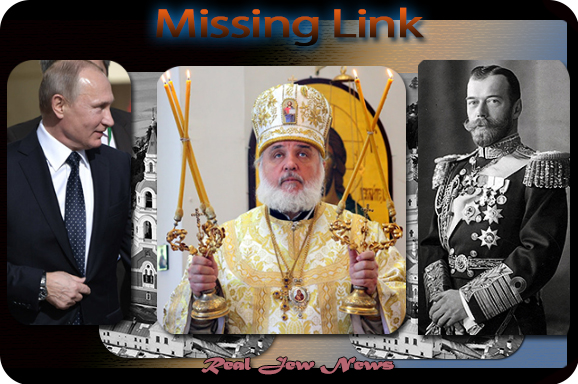
The concept of “symphonia”: This Byzantine model defines a harmonious interdependence between state power (the emperor) and divine authority (the patriarch), with neither being fully subordinate to the other. In this arrangement, the state handles secular matters and the church manages divine ones. Critics argue that in modern Russia, the church has sacrificed its moral independence by aligning too closely with Kremlin power.
A tool for power: For Russia’s rulers, the historical concept of Byzantine “caesaropapism”—where the emperor was also head of the church—justified absolute authority. After the fall of Constantinople in 1453, Moscow’s rulers claimed the mantle of the “Third Rome” and the heir to the Roman Empire, adopting the title “Tsar” (from Caesar) to cement their power. Today, this tradition helps legitimize Putin’s ambition to restore Russian dominance. [4, 5, 6]
Putin and Kirill’s alliance
Mutual support: Patriarch Kirill has been a vocal and long-time supporter of President Putin, even calling Putin’s rise to power a “miracle of God”. In return, Putin has provided the Russian Orthodox Church with significant state support, increased media visibility, and the return of state assets.
Weaponizing religion: As political allies, Putin and Kirill present their combined vision of a culturally rooted Russia standing against a “decadent” and “sinful” West. During the war in Ukraine, Kirill has framed the conflict as a “metaphysical struggle” against “evil forces,” providing a spiritual justification for the invasion. [1, 7, 8, 9]
The common thread of homophobia
State-sanctioned homophobia: Both Putin and Kirill have publicly condemned homosexuality, with their views aligning with a broader political and religious campaign to promote “traditional values”. Key actions include:
“Gay Propaganda” laws: Russia first passed a law in 2013 banning the “propaganda of non-traditional sexual relationships” to minors, later expanded in 2022 to apply to all citizens.
Constitutional ban on same-sex marriage: In 2020, Russia amended its constitution to define marriage exclusively as a heterosexual union.
“Extremist” designation: In 2023, the Supreme Court labeled the “international LGBT public movement” as an “extremist organization,” effectively criminalizing LGBTQ+ activism and simple expressions of solidarity, like displaying a rainbow flag.
Psychological and political role: The focus on homophobia serves several purposes for the Putin-Kirill alliance:
It defines a “moral enemy” in the West, which is portrayed as threatening Russia’s cultural and spiritual identity.
It creates a common rallying point, uniting nationalist and religious conservatives around a shared “traditional values” narrative.
It reinforces a rigid, top-down hierarchy consistent with the autocratic political traditions inherited from the Byzantine model. [1, 4, 8, 9, 10, 11, 12, 13, 14, 15, 16]